BIOGRAPHY
Giulia Nelli (Legnano,1992) is a visual artist. She graduated at the Brera Academy of Fine Arts and obtained a Master’s degree in Exhibition Design at Politecnico of Milan. She is enriching her education by attending the Master’s degree in Artiterapie e Terapie Espressive at Università Cattolica in Milan. In addition to her artistic practice, she has been active as a teacher, running art workshops for children.
She has exhibited in Italy and abroad, both in collective and solo exhibitions, including: Stadtgalerie Kiel (2026), mudaC – Museo delle arti Carrara (solo, 2026), Museo Diocesano di Brescia (2025), MUSE – Museo delle Scienze in Trento (2024), ex Carcere Sant’Agostino in Savona (2024), Museo Costume Moda Immagine in Milan (solo, 2023), Fondazione Dino Zoli in Forlì (2023), GASC-Galleria d’Arte Sacra dei Contemporanei in Milan (2023), Castel Belasi in Campodenno (2023), Chiesa dello Spirito Santo in Govone (solo, 2023), Spazio Archeologico Sotterraneo in Trento (2022), Fondazione Vittorio Leonesio (solo, 2022), Museo del Tessile in Busto Arsizio (2022), Museo della Permanente in Milan (2021 and 2024), Museo MISP-Museo dell’Arte del XX e XXI secolo in San Pietroburgo (2020) and Palazzo Marliani Cicogna in Busto Arsizio (solo, 2020).
She won the Crown Fine Art Award (2025) and the 9th edition of the Cramum Prize (2022).
Her installation Tra radici sopite e arida pietra (Between dormant Roots and dry Stone) is part of the Anthropocene Collection of MUSE – Museo delle Scienze in Trento. Thanks to the Piano per l’Arte Contemporanea (Plan for Contemporary Art) PAC2022- 2023 promoted by the Directorate-General for Contemporary Creativity of the Ministry of Culture.
________________________________________________________________________________________________________
“Legàmi – Légami” (Ties – tie-me)
Giulia Nelli’s work focuses on the complex web of relationships that make up a person’s identity, particularly the connections with one’s place of origin and community. In a society characterized by “light and fluid” bonds — temporary connections between individuals requiring minimal relational and cultural investment — her artworks highlight the beauty of lasting, responsible relationships, cooperation, and new forms of coexistence that integrate culture, economy, and technology seamlessly into the symbiotic life of the earth.
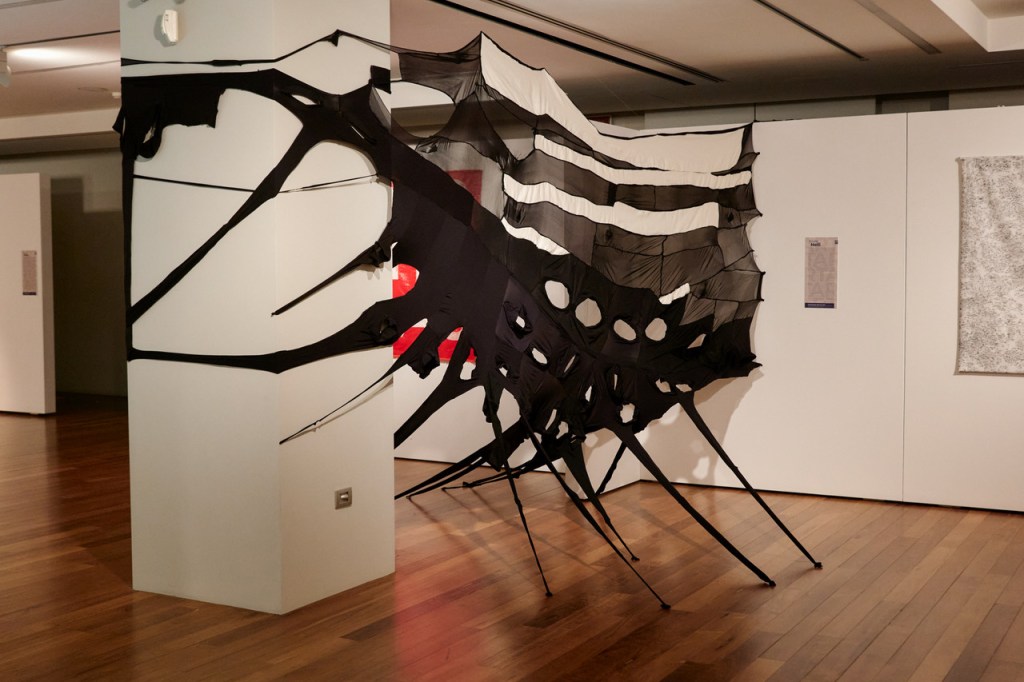
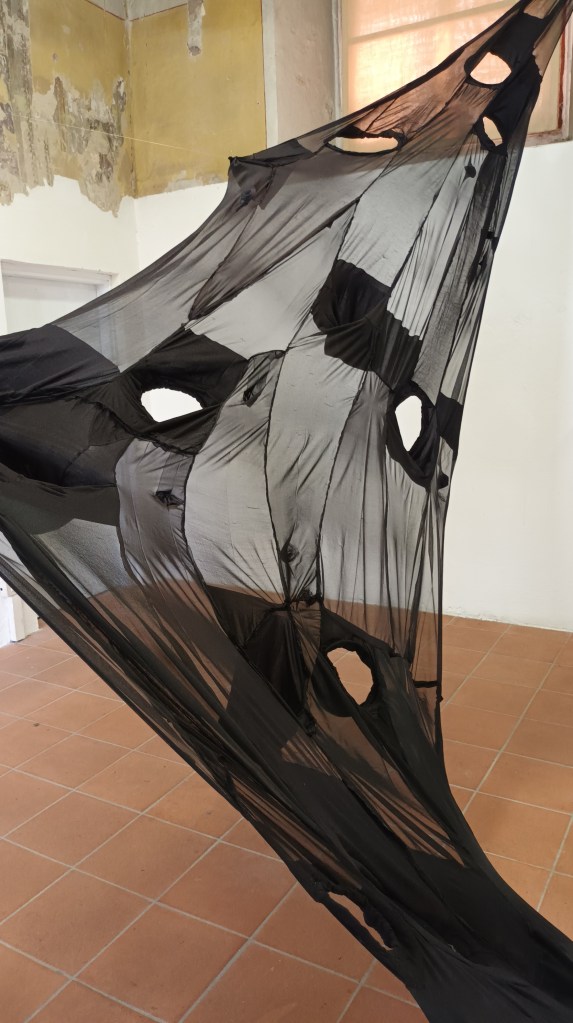
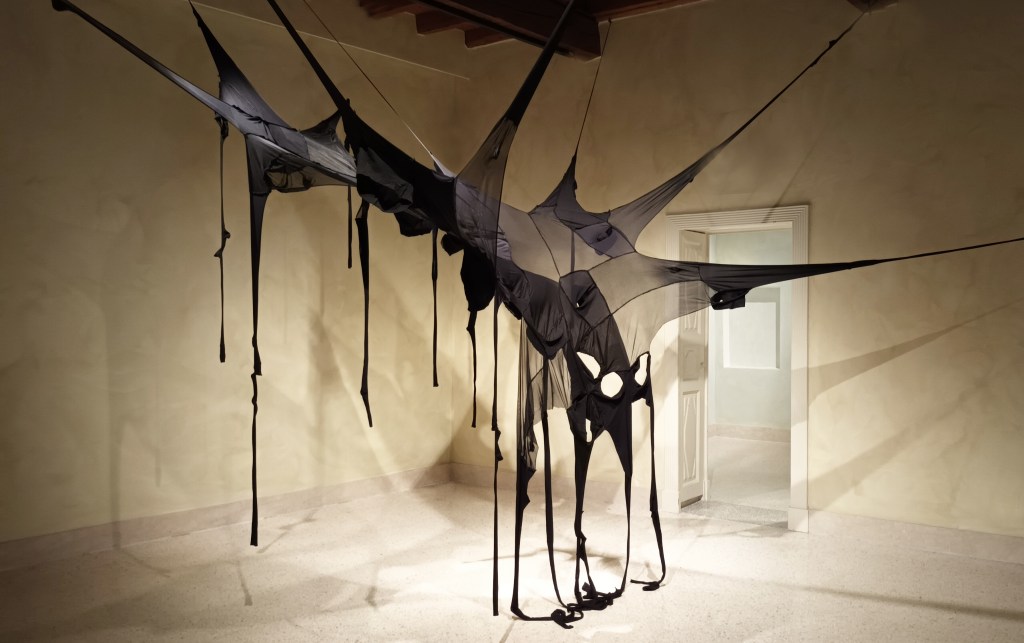
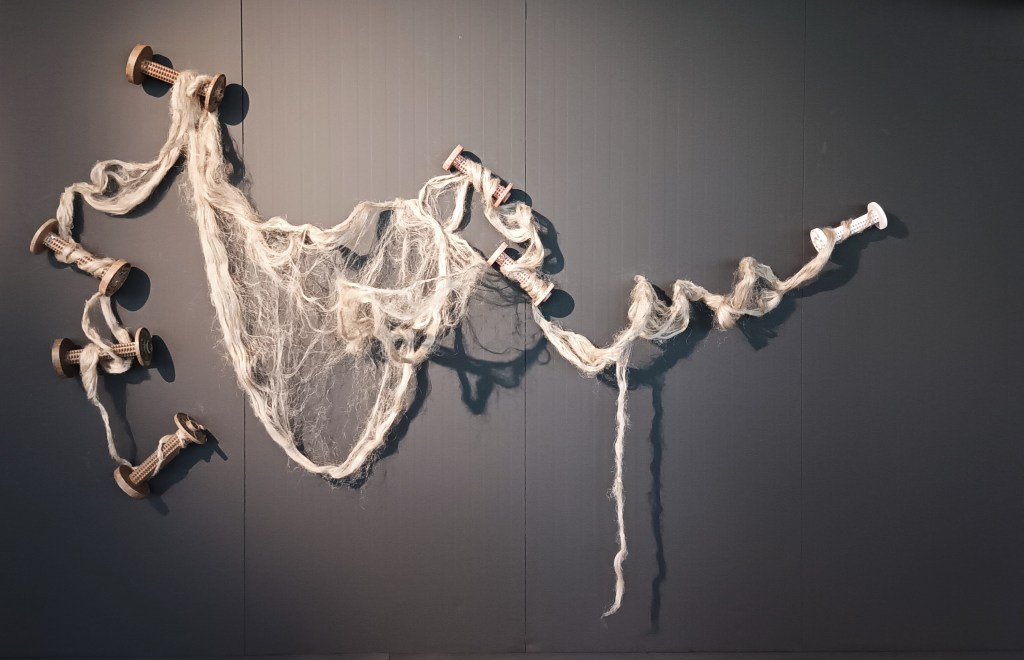
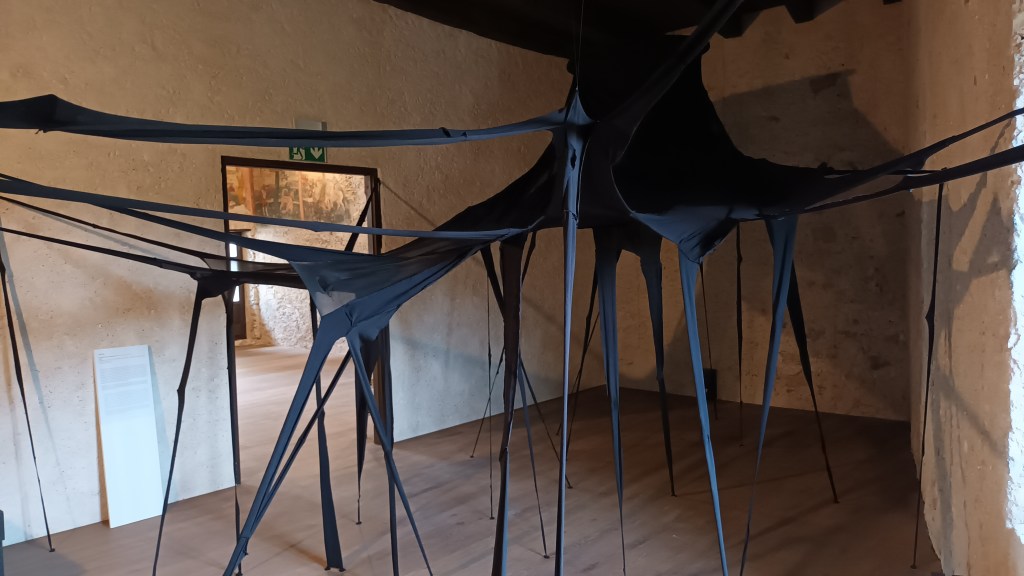
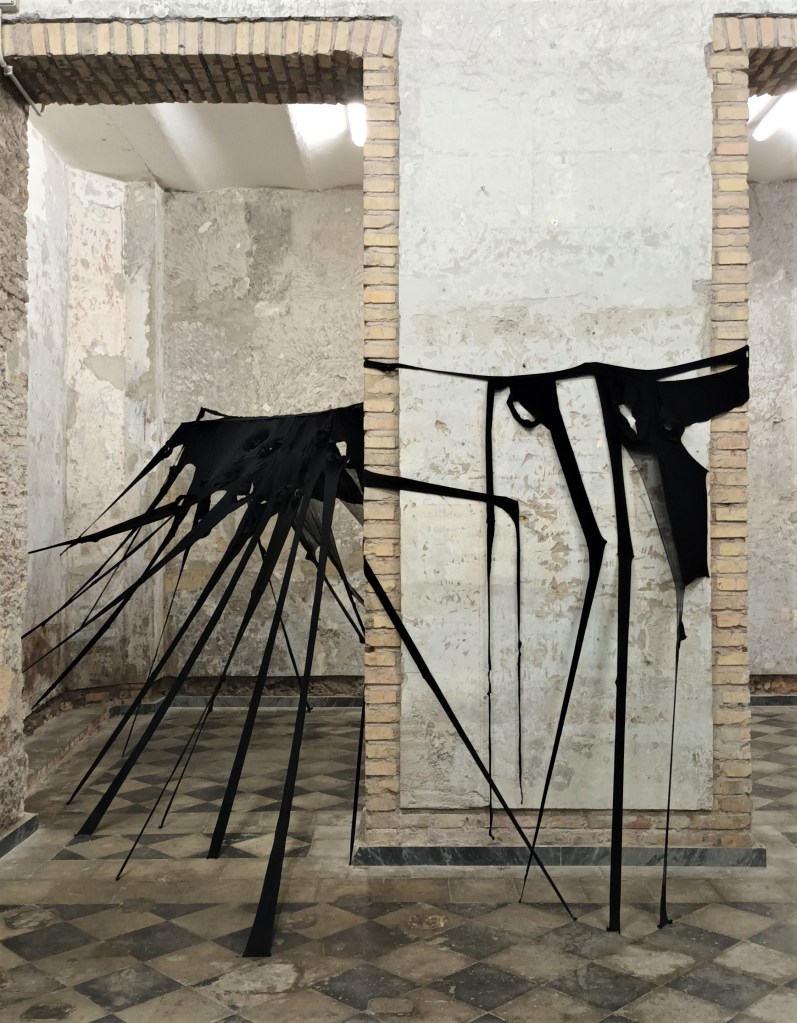
Nelli’s artworks emerge from a process of blending the world of consumer goods, specifically women’s tights, with textile art. She draws from the texture and intertwining of materials like polyamide and elastane, creating a personal expressive language rooted in simplicity of form and materiality.
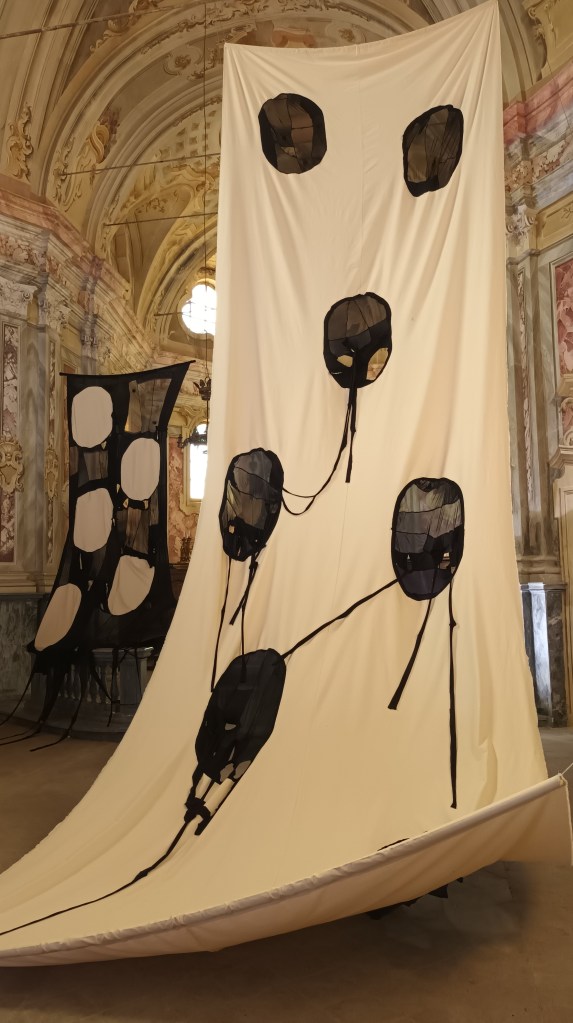
The materials she uses include natural fabrics like cotton and linen, which have strong metaphorical value tied to purity, the sacred, and the mystery of life and death. Alongside these, she incorporates industrial materials — such as tights, often discarded or reused — that have symbolic significance in the social and cultural changes within the female universe in recent decades.
The use of recycled industrial materials carries an implicit environmental message, especially when contrasted with the natural fabrics. The artist believes in an aesthetics of integration and hybridization of figures and materials belonging to both nature and human activity. This encourages us to look beyond the chaos of human marks on the land and create a new balance between humanity and nature.
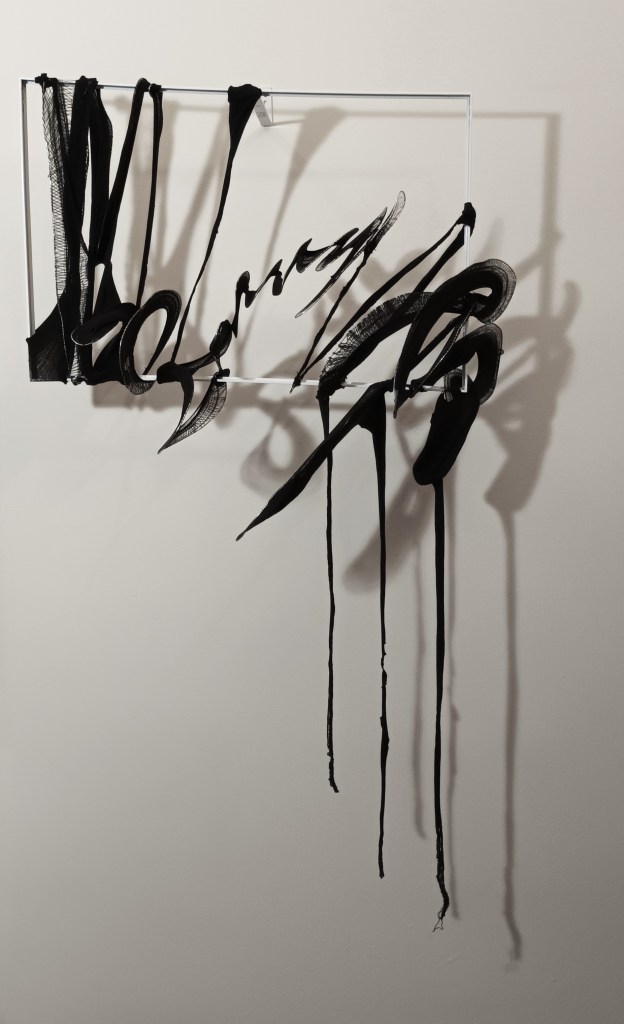


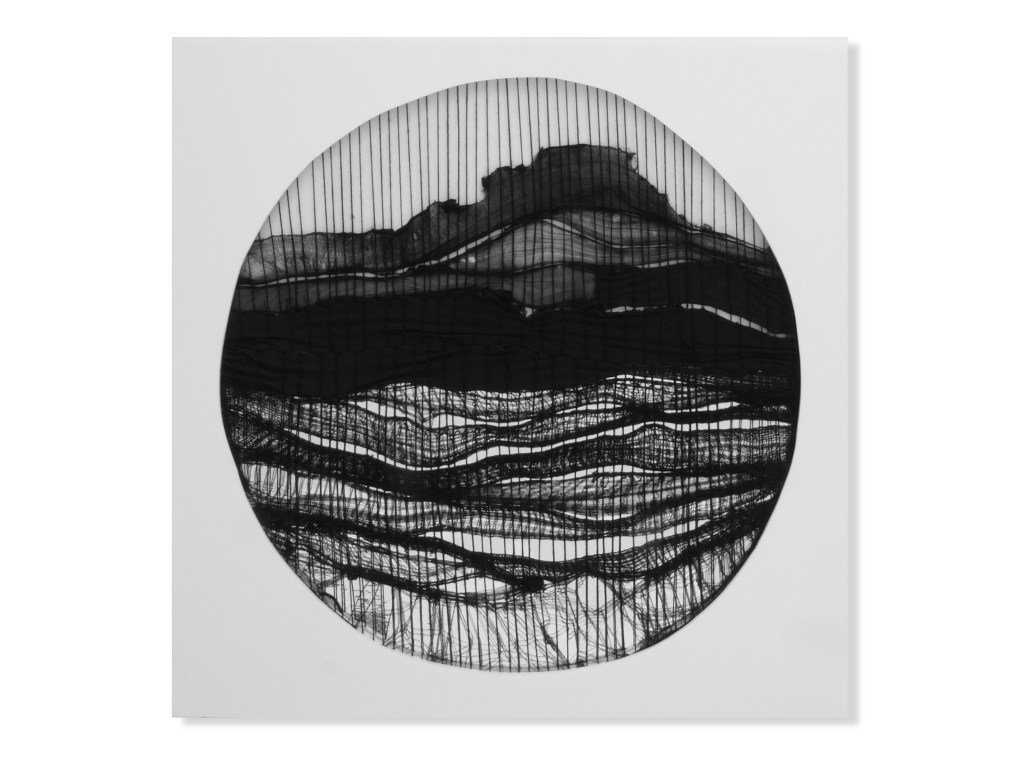
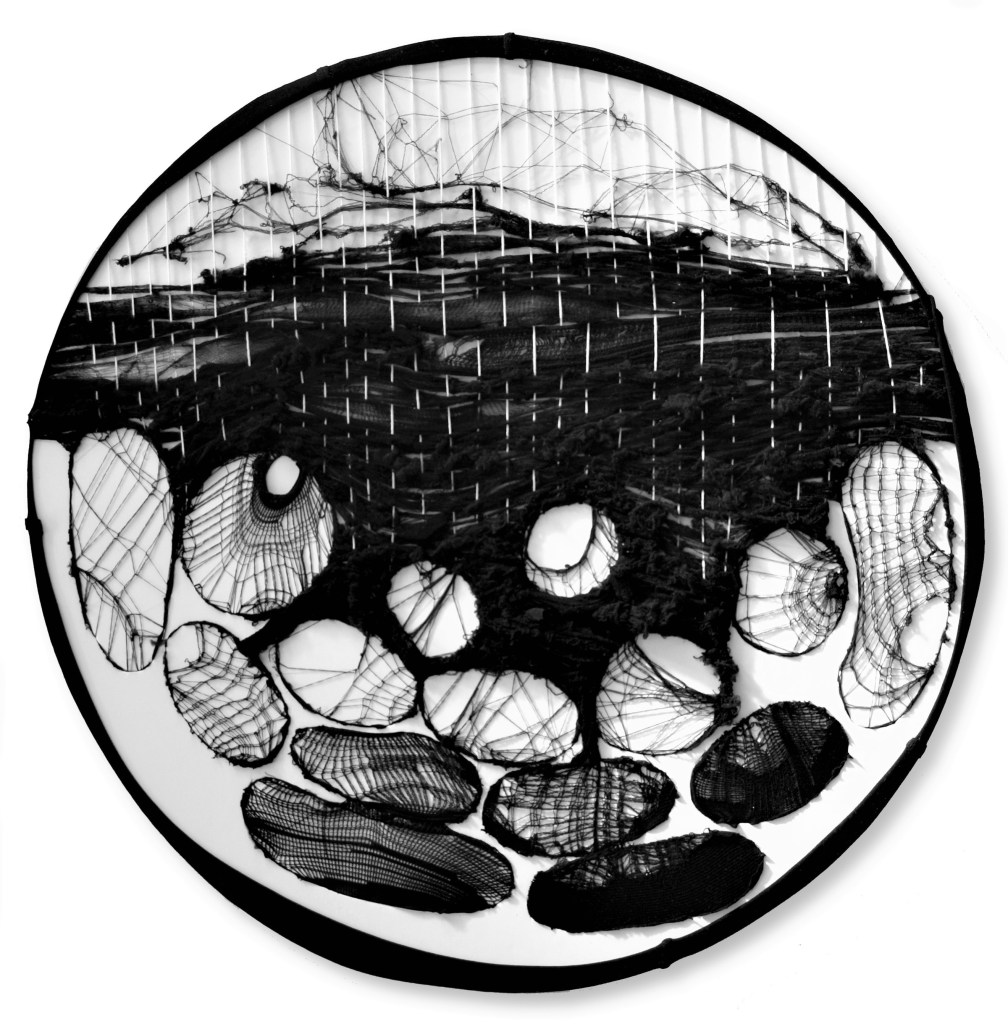

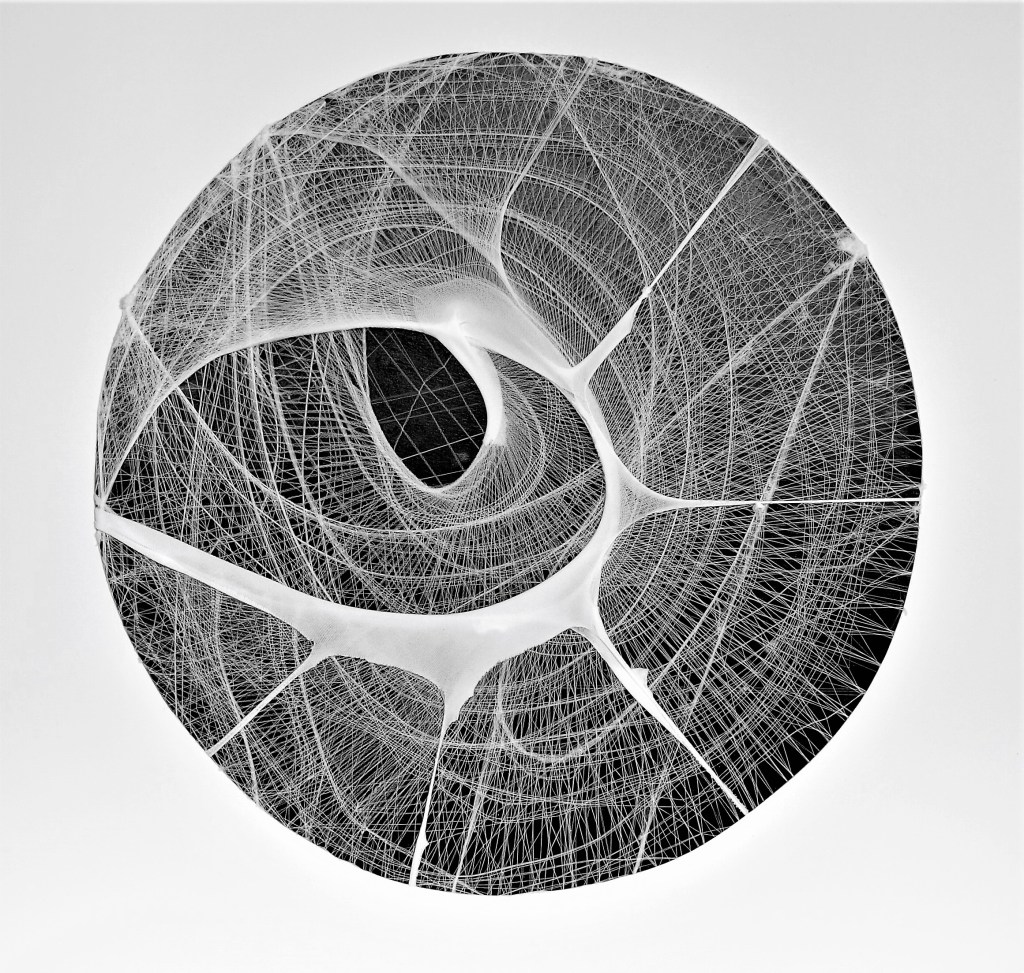
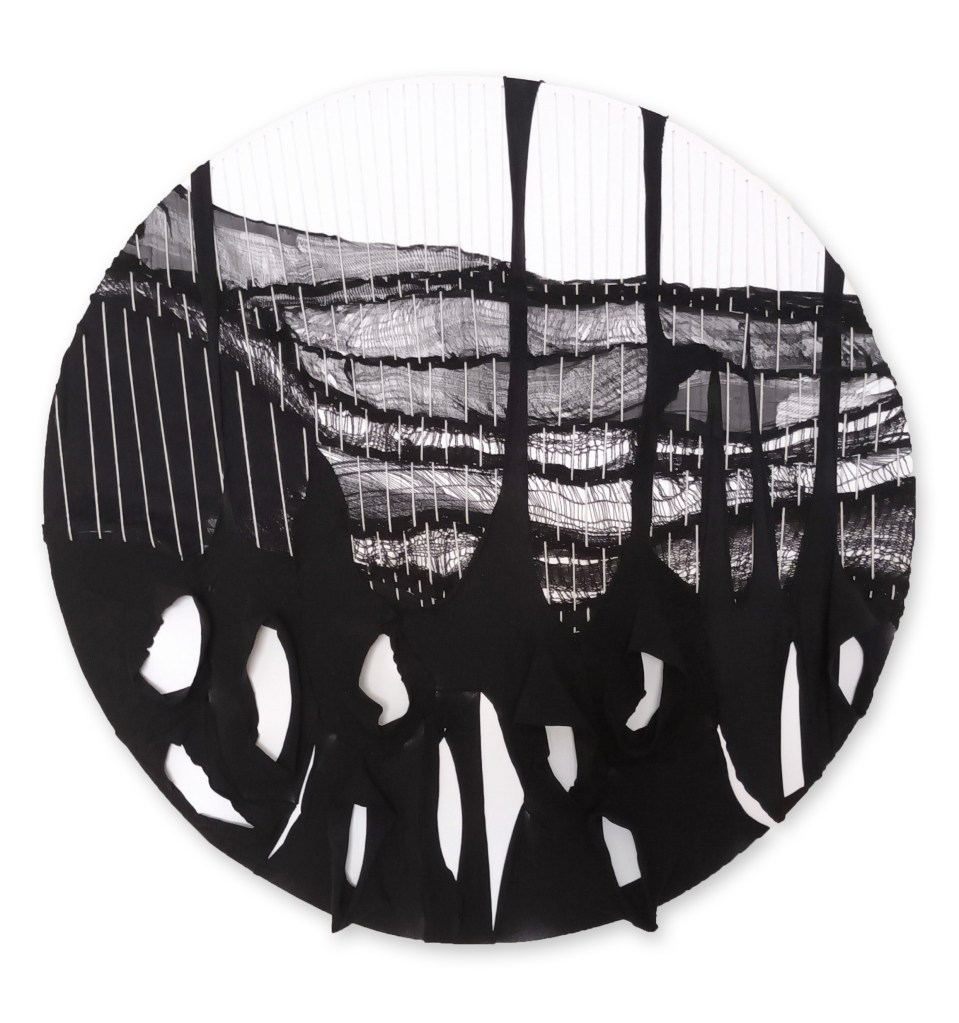
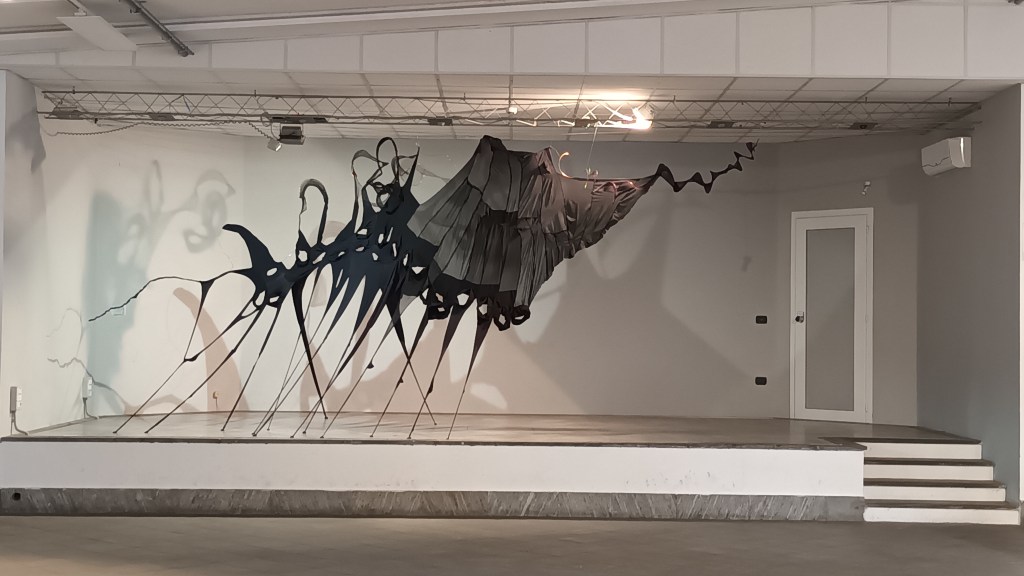
The material in the artist’s large, site-specific installations plays a central role in conveying a powerful and immediate message. In these installations, the material itself communicates through its forms that flow sinuously in space, creating a dynamic contrast between solids and voids, light and shadow. The atmosphere created by these works offers an immersive experience that encourages viewers to recall personal memories and reflect deeply on the themes of life and contemporary society. Visitors are free to explore the material, finding their own interpretations and meaningful insights.
The material’s composition, its predominant black color, and the physical gestures required to shape it all contribute to the conceptual meaning of the works: the tearing of fabric represents the drama of broken bonds, while the interplay of fullness and emptiness evokes the isolation that often accompanies us. The act of re-tying symbolizes humanity’s continuous effort to overcome this isolation by forming new relationships, which may be strong and true.